
Vegetable-tanned leather is a preserved skin, not a plastic. It dries, it drinks, it darkens, and it will outlive you if you give it about ten minutes of attention a year. Most ruined leather I see was not worn out — it was cleaned wrong, dried wrong, or fed something it could not digest.
The short version
- Wipe dust off with a dry cloth whenever you think of it.
- Clean with a barely damp cloth, never a soaked one.
- Condition two to four times a year, thin coats only.
- Dry wet leather slowly, at room temperature, away from heat.
- Store in open air on a hanger or shelf, never sealed in plastic.
Cleaning
Start dry. A horsehair brush or a soft cloth removes most of what accumulates. For anything the brush will not lift, dampen a cloth with water, wring it until it is barely cool to the touch, and wipe with the grain. If the piece is genuinely soiled, use a dedicated saddle soap or a pH-balanced leather cleaner, worked into a light lather with a damp sponge and wiped off immediately. Let the piece dry fully before you condition it — conditioner over trapped dirt seals the dirt in.
Never use household detergent, alcohol wipes, baby wipes, bleach or a magic eraser. Detergents strip the fats the tannery put in and leave the fibre brittle; alcohol pulls dye straight out of the surface.
Conditioning
Conditioning replaces oils that evaporate and migrate out over time. The signs you are due: the surface looks chalky, the piece feels stiff, or a fold shows pale cracking lines.
- Neatsfoot oil — deeply penetrating, darkens leather significantly and permanently. Excellent for holsters, sheaths and work belts. Use pure neatsfoot, not "neatsfoot compound", which contains petroleum distillates.
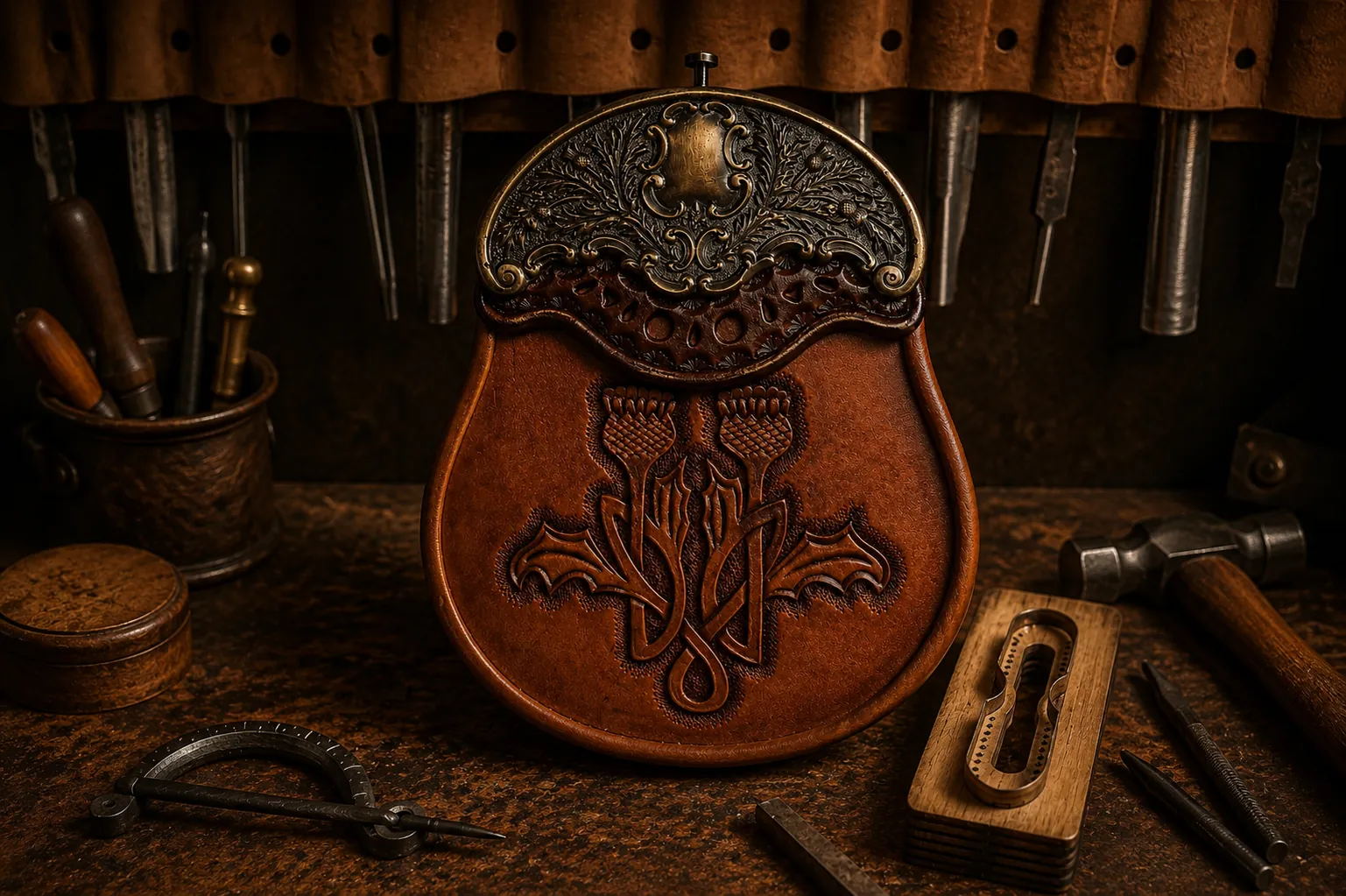
- Beeswax and tallow-based balms — a lighter feed plus a mild water-resistant barrier. My default for tooled decorative work, because they darken less.
- Lanolin-based creams — good for supple garment leathers and linings.
Apply thin. Put a small amount on a cloth or your fingertips, work it in with small circles, and let it sit overnight so it distributes evenly before you buff off any residue. Two thin coats a day apart beat one heavy coat every time. Over-oiling is real damage: it saturates the fibre, the leather goes limp and spongy, and it never fully recovers.
Test any new product on the back or an inside edge first. Every hide takes a finish differently.
Water, rain and full soakings
Water alone does not destroy leather — heat and speed do. If a piece gets soaked, blot it with a towel, reshape it by hand while it is damp, stuff sheaths and bags loosely with paper to hold their form, and leave it to dry at room temperature over a day or two. Keep it away from radiators, hair dryers, car dashboards, camp fires and direct sun. Heat shrinks and hardens wet fibre permanently, and no amount of conditioner brings it back. Once it is dry to the touch but still slightly cool, condition it — that is the moment leather absorbs best.
Salt water needs one extra step: rinse with clean fresh water first, or drying salt crystals will abrade the fibre from inside.
Storage
Leather needs airflow. Store belts hanging or loosely rolled rather than folded on a crease. Store bags stuffed lightly with acid-free paper so they hold shape. Never store leather in a plastic bag or an airtight tub — trapped moisture grows mould, and the plasticiser in vinyl can transfer into the finish. A cotton dust bag on an open shelf, out of direct sunlight, is ideal.
If mould does appear, take the piece outside, brush it off dry, wipe with a cloth dampened in a one-to-one mix of water and white vinegar, dry it slowly, and then condition.
Living with patina
Full-grain vegetable-tanned leather darkens where it is handled and where sunlight reaches it. Scratches on a tooled piece will often burnish out under a thumb and a drop of conditioner. Do not chase a factory-new surface; the marks are the record of use, and they are the reason this material is worth what it costs.
If you are unsure what a specific piece needs, the leather it was cut from matters — the guide to leather grades explains why, and you can always ask me directly about a piece that came off this bench.

Want a piece made for you?
Every commission is one of a kind — hand-tooled, and made to order.
Commission a Piece