
Every seam on a Diamond Jim piece is sewn by hand — two needles pulling one waxed thread through holes I punched myself. It is slower than a machine by an order of magnitude. I do it anyway, and here is why.
One thread, two needles
A sewing machine makes a lockstitch: a top thread and a bottom thread knotted together at every hole. Fast, and fine — until one stitch wears through. Then the knot lets go and the seam unzips like fishing line. The saddle stitch is different. One thread runs the whole seam, looping back on itself through every hole. Cut a stitch and the rest stay put. You can lose three in a row and the seam still holds.
The holes come first
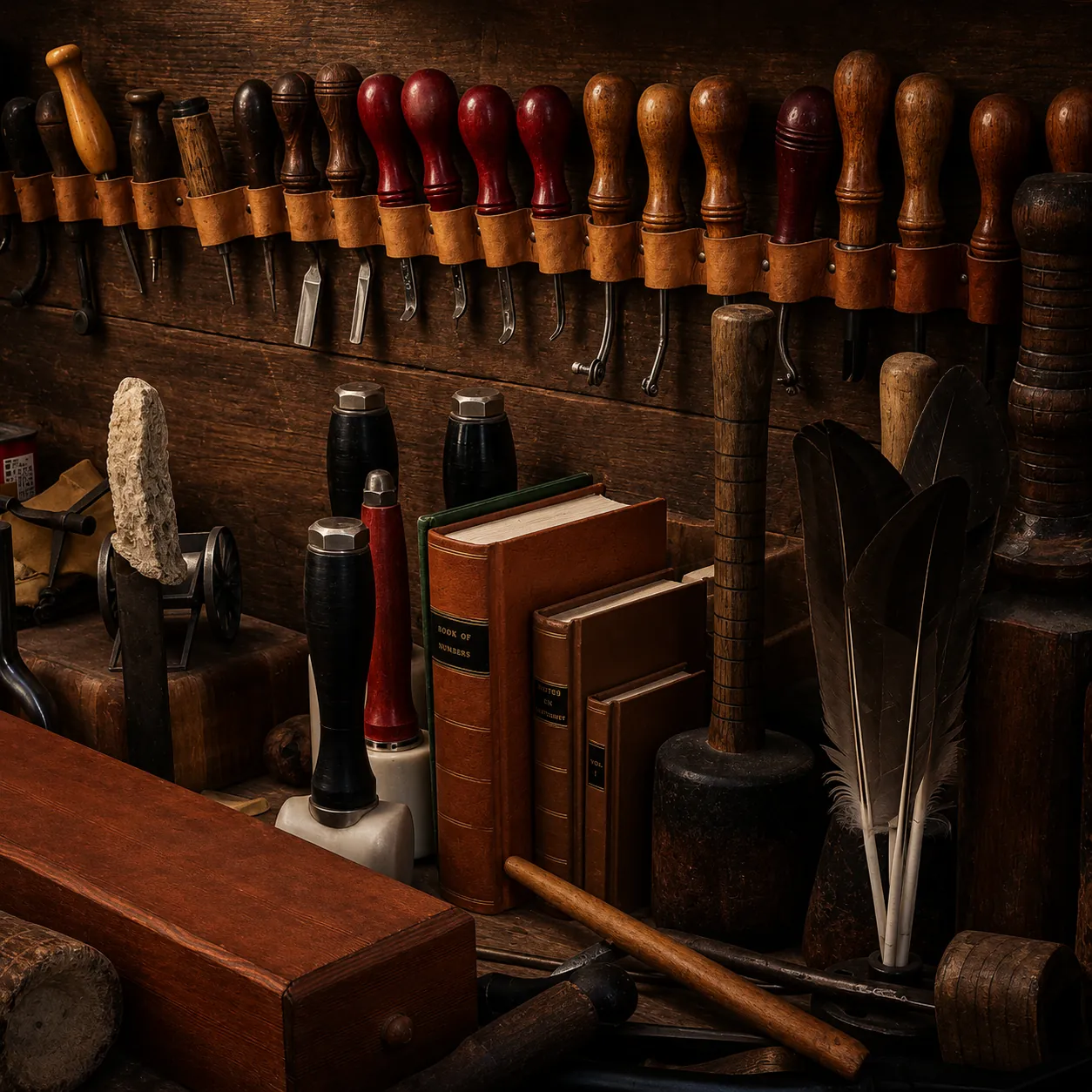
Before any thread, I mark and punch the stitch line with pricking irons — those rows of chisels on the wall. Even spacing, even angle, every time. A straight, evenly-canted line of stitches is the first thing another maker looks at, and the last thing a machine gets right on thick leather.
Slower on purpose
A hand-stitched seam might take an hour that a machine would do in a minute. But it is the seam that outlives the leather around it. I have resewn factory bags whose stitching failed while the hide was still good. I have never had to resew my own.
Machine-sewn is faster. Hand-sewn is finished.
If you own a piece from the bench, that seam is guaranteed for as long as you own it. Bring it back if it ever needs attention — it won't.

Want a piece made for you?
Every commission is one of a kind — hand-tooled, and made to order.
Commission a Piece